

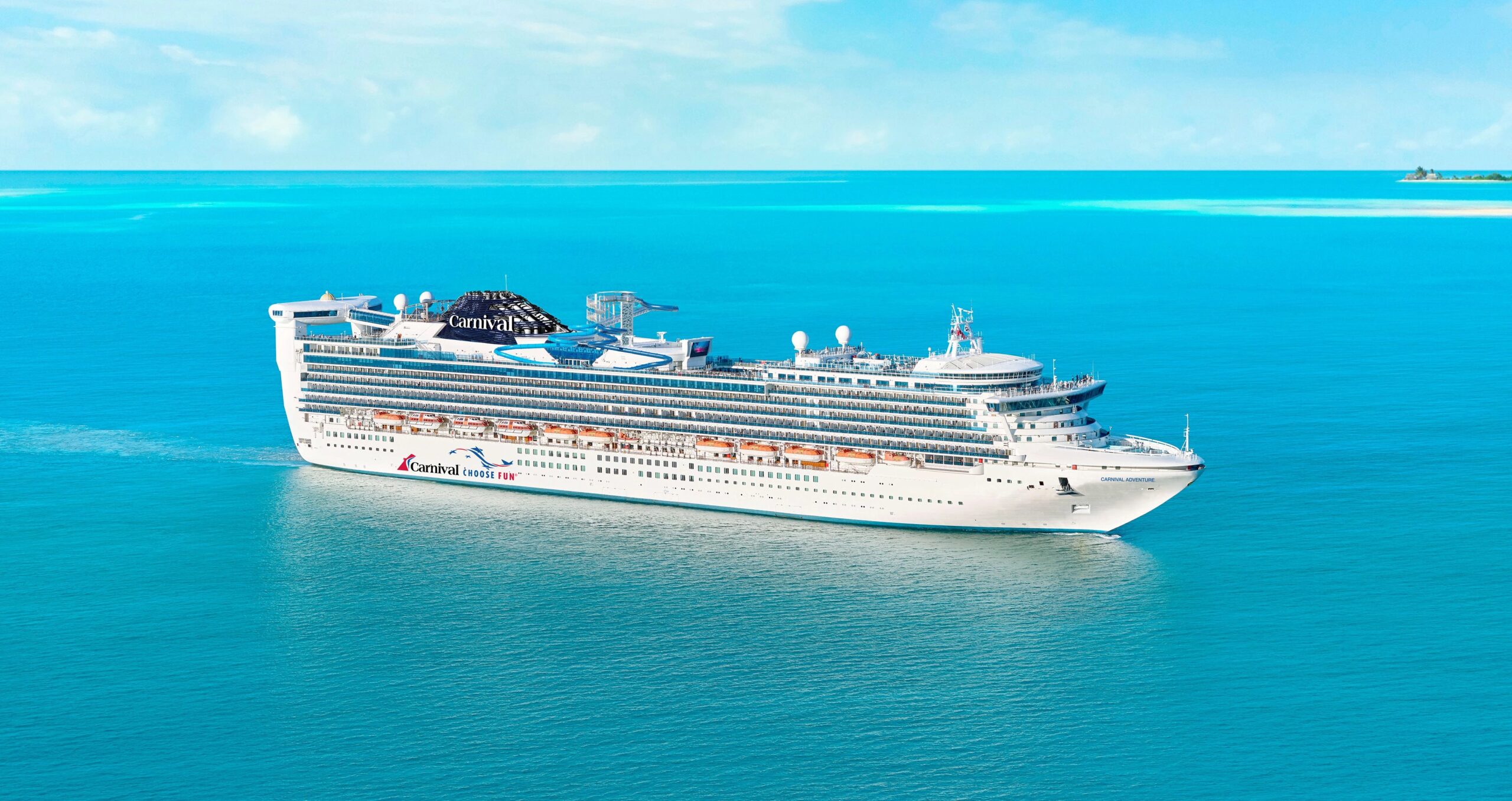
Carnival just announced that the Carnival Adventure is joining its North American fleet for seasonal sailings. It’s exciting news for passengers looking for a new experience. But there’s something about this ship that most people don’t know – something that changed the cruise industry’s approach to safety.
The Carnival Adventure spent her most recent years sailing for P&O Cruises Australia until that brand was discontinued in 2024. Before that, she had quite a journey. And before we even get into the dramatic part, it’s worth noting this ship has been operating since 2002, sailed under three different names, and if you dig into her history, you’ll find some genuinely significant stories about what she’s been through.
Which Star Princess Are We Actually Talking About?
Let’s clarify something important here, because Princess Cruises has reused the Star Princess name enough times to genuinely confuse people. There’s the original Star Princess from 1989 to 1997, which carried about 1,600 passengers. Then there’s the current Star Princess that just launched in 2024 with all the latest bells and whistles.
But the Carnival Adventure is the second Star Princess – the middle-sister built in 2002 by Fincantieri in Italy.
It’s the 2002 Star Princess, now Carnival Adventure, that this story is about.
The Night That Changed Cruising Forever
It was March 23, 2006. The Star Princess was headed from Grand Cayman to Montego Bay with roughly 2,700 passengers and crew aboard. The night was pretty ordinary – calm seas, good visibility, and the wind was about 25-30 knots across the port bow, which is noticeable but not unusual.
At 2:50 AM, security reported smelling something burning near deck 14. Someone checked it out, nothing was found, and the patrol was told to keep watching the area.
Nineteen minutes later, that changed.
When a Cigarette Becomes a Crisis
At 3:09 AM, a passenger in stateroom B2541 looked out onto his balcony and saw an orange glow below him. Within minutes, that glow had become an active fire. He hit the manual fire alarm. At almost the same moment, the bridge lookout is reporting flames on the port side.
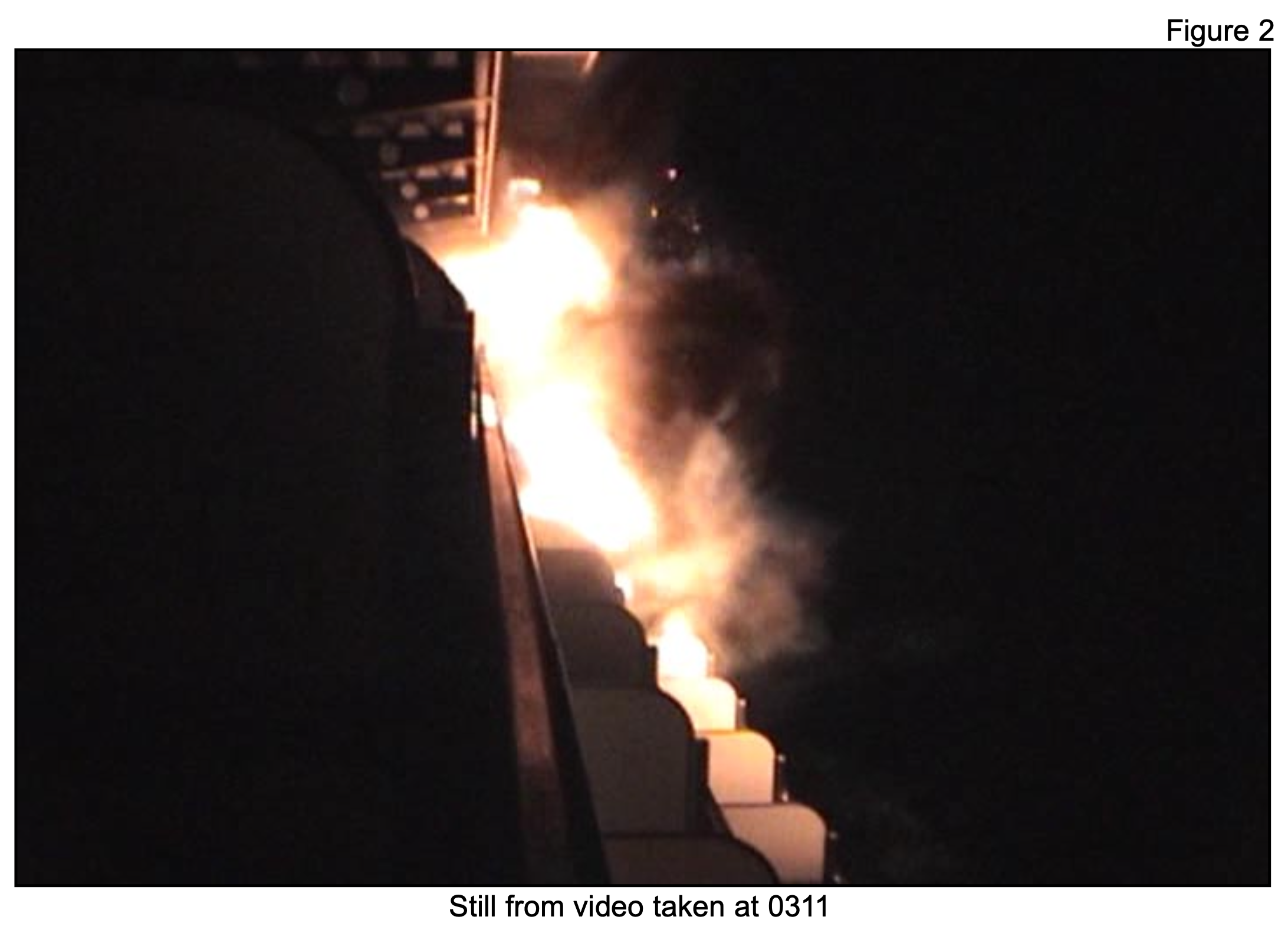
The investigation would later determine that the fire actually started on a balcony one deck below, in stateroom C316. The likely cause: a cigarette that someone had thrown onto a balcony several hours earlier. That cigarette smoldered for roughly 20 minutes before finally igniting the materials on the balcony.
But what exactly was on that balcony that burned so intensely?
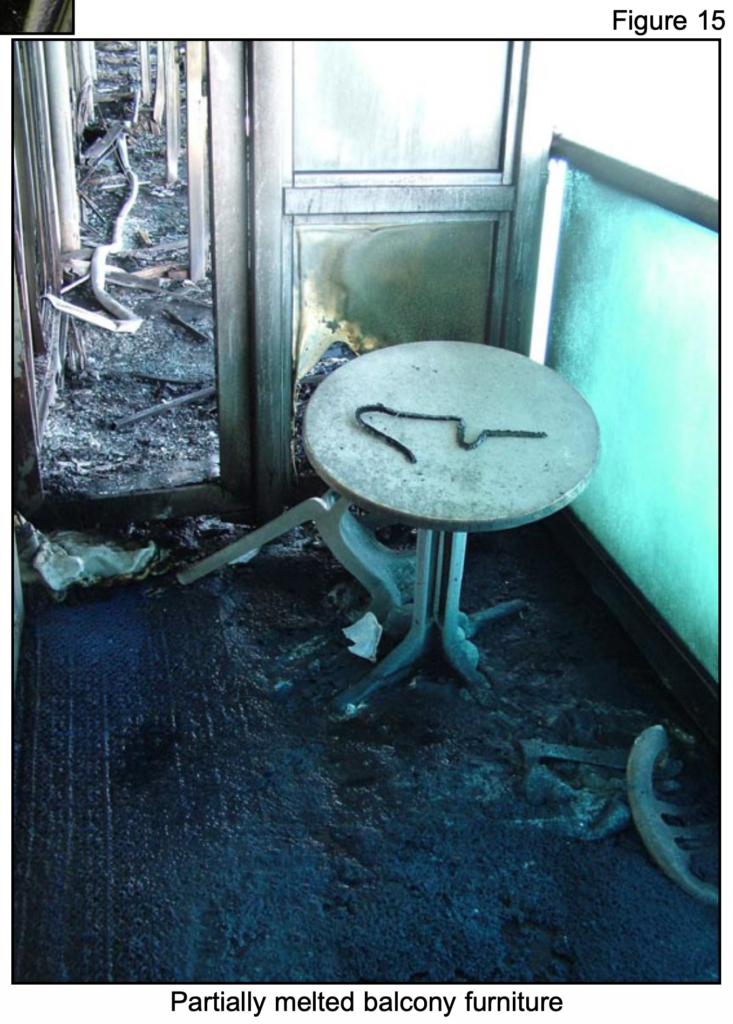
The Star Princess’s balconies were built using materials that looked great and performed well in normal conditions: polycarbonate partitions, polyurethane deck tiles, and lightweight plastic furniture. But they had one significant problem when exposed to intense heat – they burned intensely and generated enormous amounts of thick, black smoke.
With the wind still at 25-30 knots, the fire didn’t just burn steadily – it spread rapidly. Investigators would later describe how the wind created what they called “blow-torch effects” in the gaps between the balcony dividers, significantly accelerating the fire’s growth. The plastic materials didn’t just catch fire; they melted and burned at high temperatures, producing massive quantities of dense black smoke in the process.
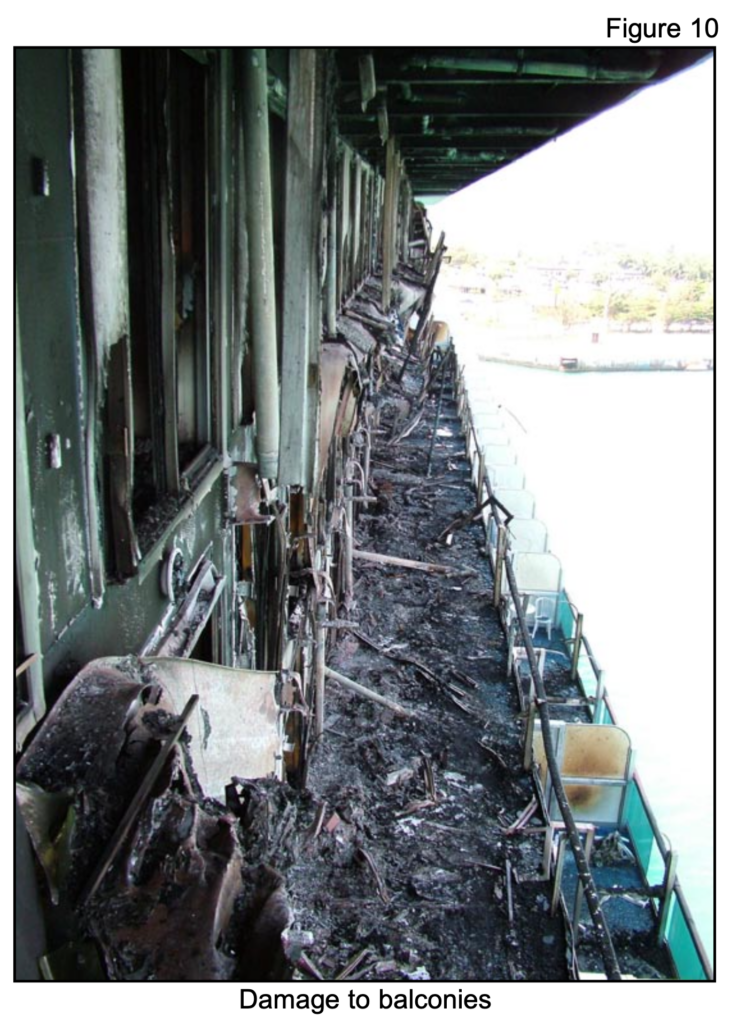
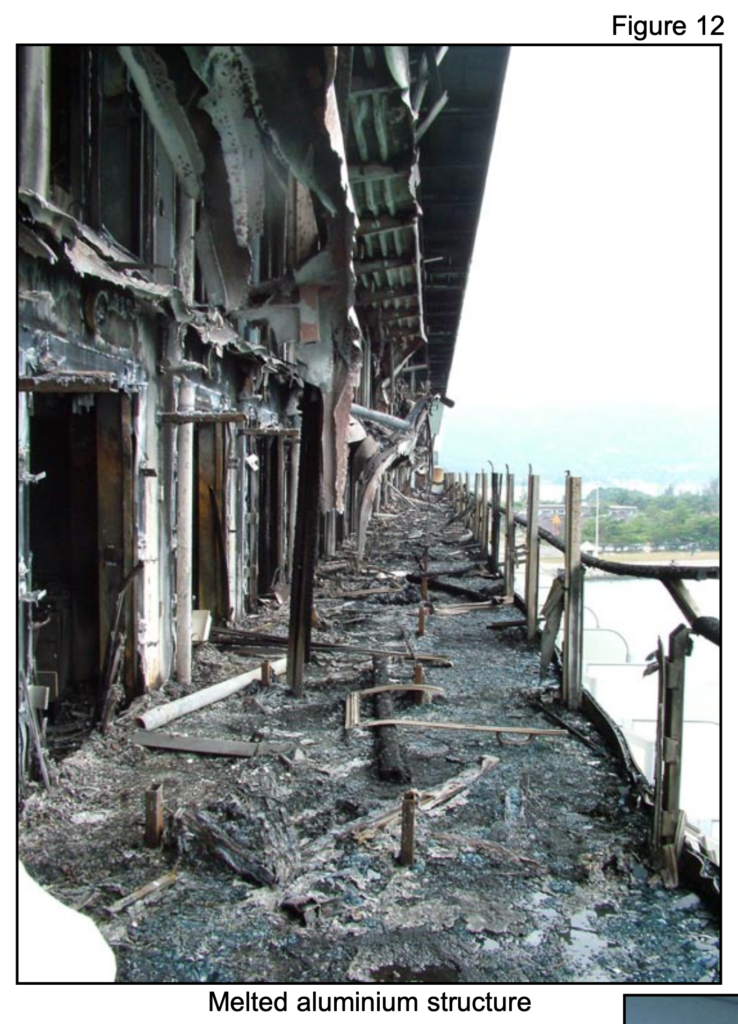
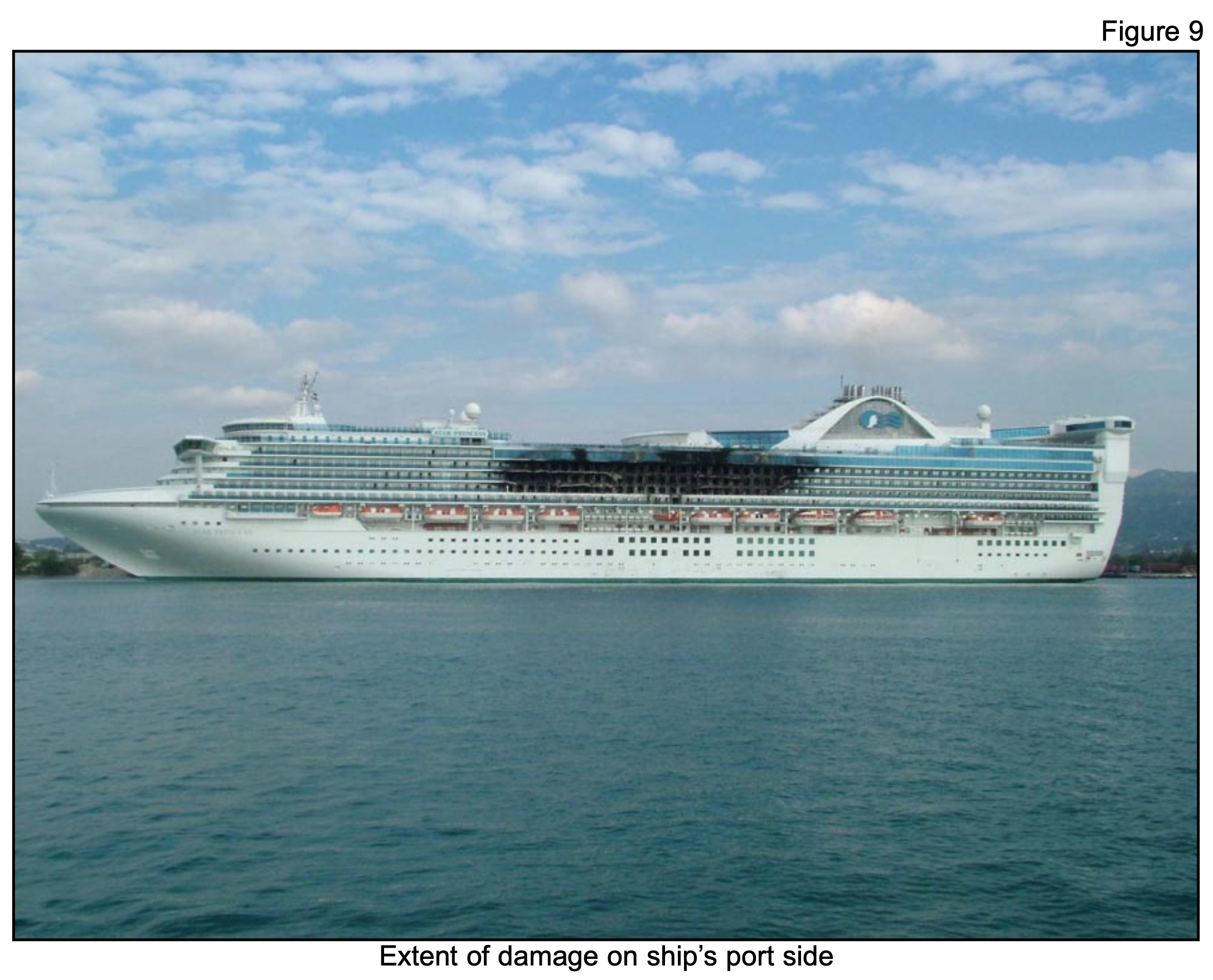
The fire detection system recorded just how quickly the fire spread. Within two minutes of the initial alarm, heat detectors were activating in staterooms C316 and C318. By 3:14 AM, alarms were going off on deck 11. By 3:16 AM, deck 12. Within 30 minutes, the fire had spread across three vertical fire zones on five different decks – decks 9 through 14!
One thing that probably prevented this from becoming a major catastrophe was when the intense heat shattered the glass doors leading from staterooms to balconies, passengers left their rooms when the water mist fire systems activated. Those systems kept the fire from spreading into the ship itself, which would have been far more serious.
A Ship Full of Toxic Smoke
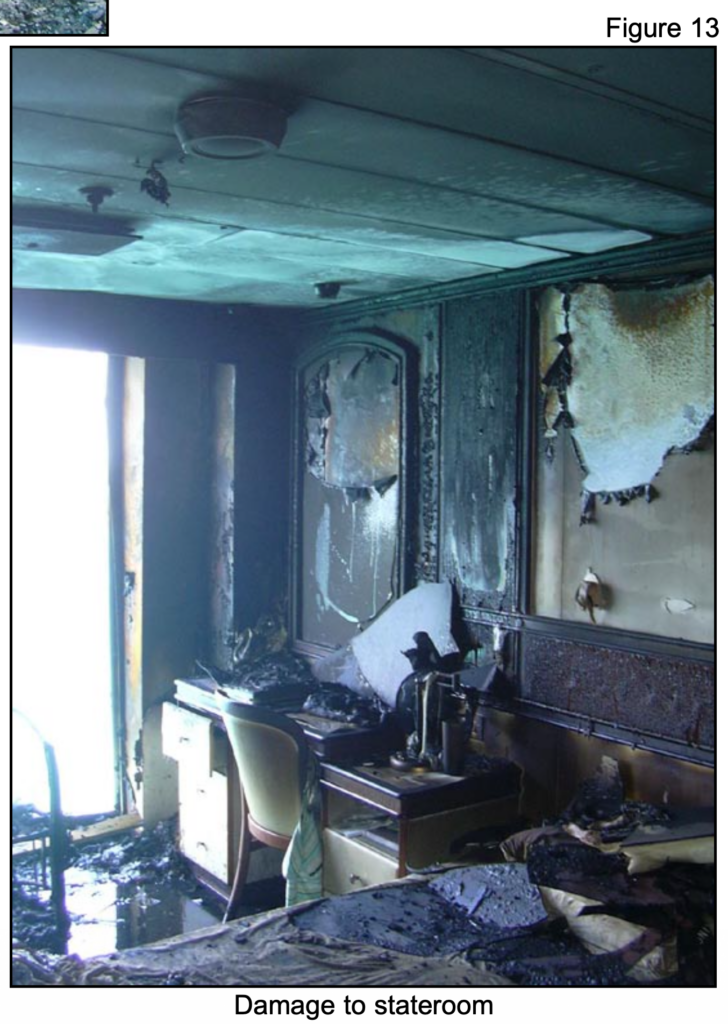
Remember all that thick black smoke generated by the burning plastic materials? There was a lot of it. Visibility dropped below half a meter. The byproducts of burning plastic include gases that are dangerous to breathe, especially in high concentrations.
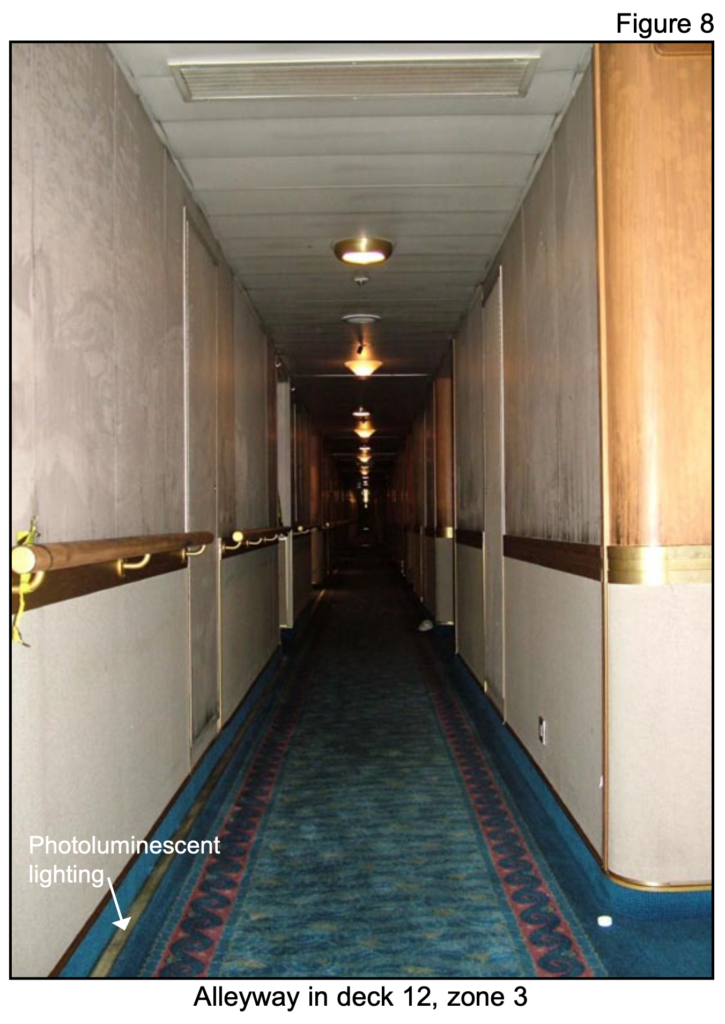
Deck 12 was hit the hardest. Passengers trying to evacuate found themselves in a hallway that was completely obscured by toxic black smoke. The ship had glow-in-the-dark safety lights installed on the floor to help guide people during emergencies, but they proved useless as they weren’t visible through the intense smoke.
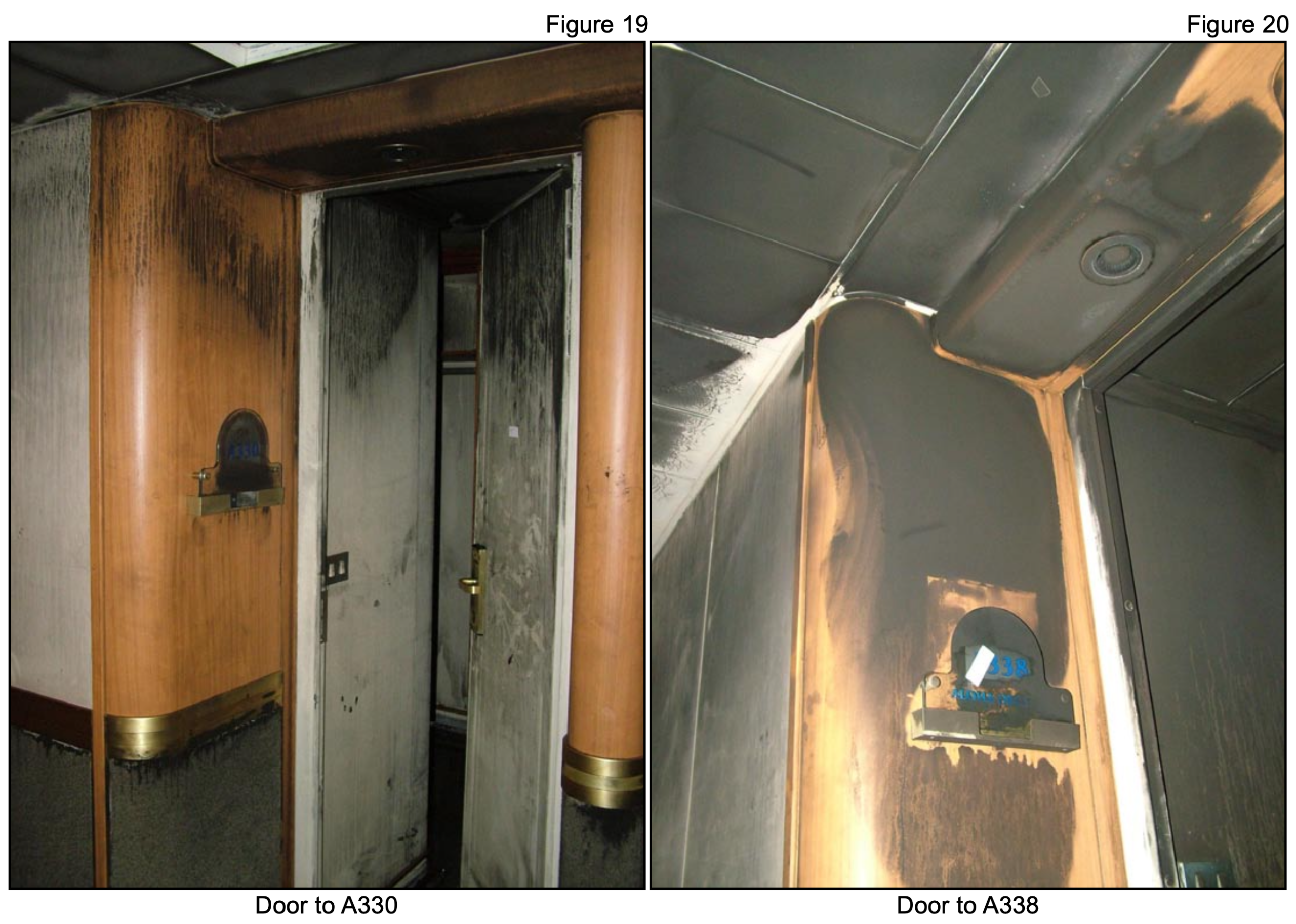
In stateroom A340, a couple tried calling the ship’s emergency number from their stateroom phone. Unfortunately, the customer service desk that monitored emergency calls had stopped being manned once the crew alert signal was sounded. Their call went unanswered.
Instead, they made the decision to seal their cabin like we’re taught to do when faced with a fire outside our door. They placed wet towels at the bottom of the door, propped up a mattress for additional blocking, and waited. They could hear the captain’s announcements over the public address system, but had no way to tell the crew they needed help.
Other passengers who attempted to evacuate faced different problems. Some were overwhelmed by the smoke in the corridors. A 72-year-old passenger opened his balcony door, was engulfed by the black smoke, and collapsed. Firefighters found him semi-conscious. Another passenger, the husband of someone who had successfully evacuated, was discovered unconscious in the same hallway.
Unfortunately, only one of these men survived.
What the Investigation Found
The United Kingdom’s Marine Accident Investigation Branch (MAIB) led the investigation, as the ship was registered in Bermuda, a UK territory. When they examined what went wrong, they uncovered that the balconies on the Star Princess actually met all applicable regulations.
Every single requirement was satisfied.
The issue wasn’t that the ship violated the rules. The issue was that the rules themselves had a gap.
Balconies had been classified as “open deck spaces” – essentially treated the same as a ship’s promenade deck. That categorization meant significantly fewer fire safety requirements applied compared to passenger accommodation areas. This meant using polycarbonate partitions, polyurethane tiles, and plastic furniture was perfectly legal. Doors between staterooms and balconies didn’t need to be fire-rated or self-closing. Plus, there were no requirements for fire detection or suppression systems on the balconies themselves.
The ship had followed the rulebook perfectly. However, the rulebook didn’t take into consideration the fire safety issues that would come up when these materials are combined with with high winds and open flame.
The investigation noted that this design had been industry standard since the 1980s when balconies first became popular on cruise ships. Everyone – shipbuilders, classification societies, maritime administrations – had made the same assumption about balconies being “open deck spaces” and moved forward without questioning whether that made sense from a fire safety perspective.
The Star Princess fire proved that assumption was very wrong.
The Cruise Industry’s Response
The findings from the investigation let to significant action across the cruise industry. The International Council of Cruise Lines issued a safety notice in April 2006 directing all members to immediately implement corrective measures. The MAIB issued a Safety Bulletin in January 2006 recommending that the UK Maritime Administration submit a formal request to the International Maritime Organization (IMO) to urgently amend SOLAS (Safety Of Life At Sea) regulations to address fire safety in external deck areas.
By May 2006, the IMO had already approved interim guidance and proposed amendments to SOLAS that would require balcony partitions to be constructed from non-combustible materials, restrict the use of combustible materials on balconies, and mandate fire detection and suppression systems where needed.
The financial implications for cruise operators were huge. Carnival Corporation, which owned Princess Cruises, announced plans to replace combustible balcony partitions on its entire fleet of 81 ships – more than 26,400 balconies in total. Other cruise lines implemented similar programs. It became an industry-wide retrofit that happened pretty quickly.
Princess Cruises also implemented additional measures including enhanced fire-fighting procedures and training, dedicated search and rescue teams, improved crew communication protocols, removal of door wedges that could compromise fire safety doors, and revised emergency procedures. The company essentially used the incident as an opportunity to overhaul their safety approach.
Repairs, Recovery, and a New Chapter for Star Princess
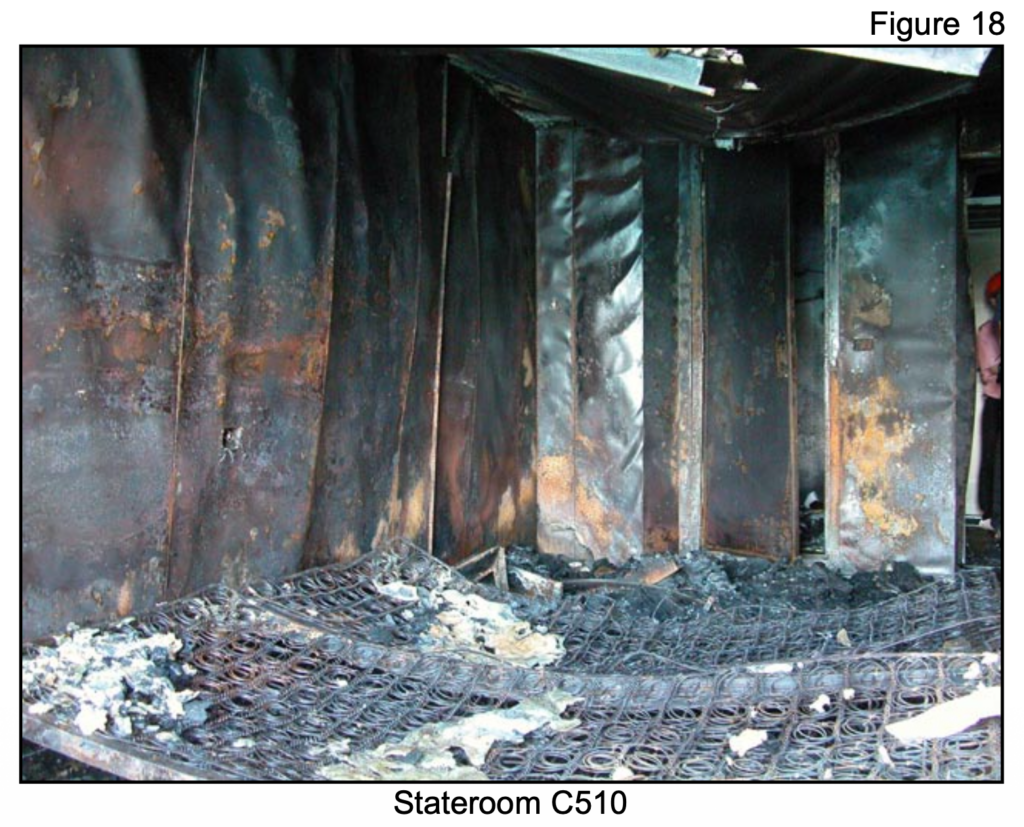
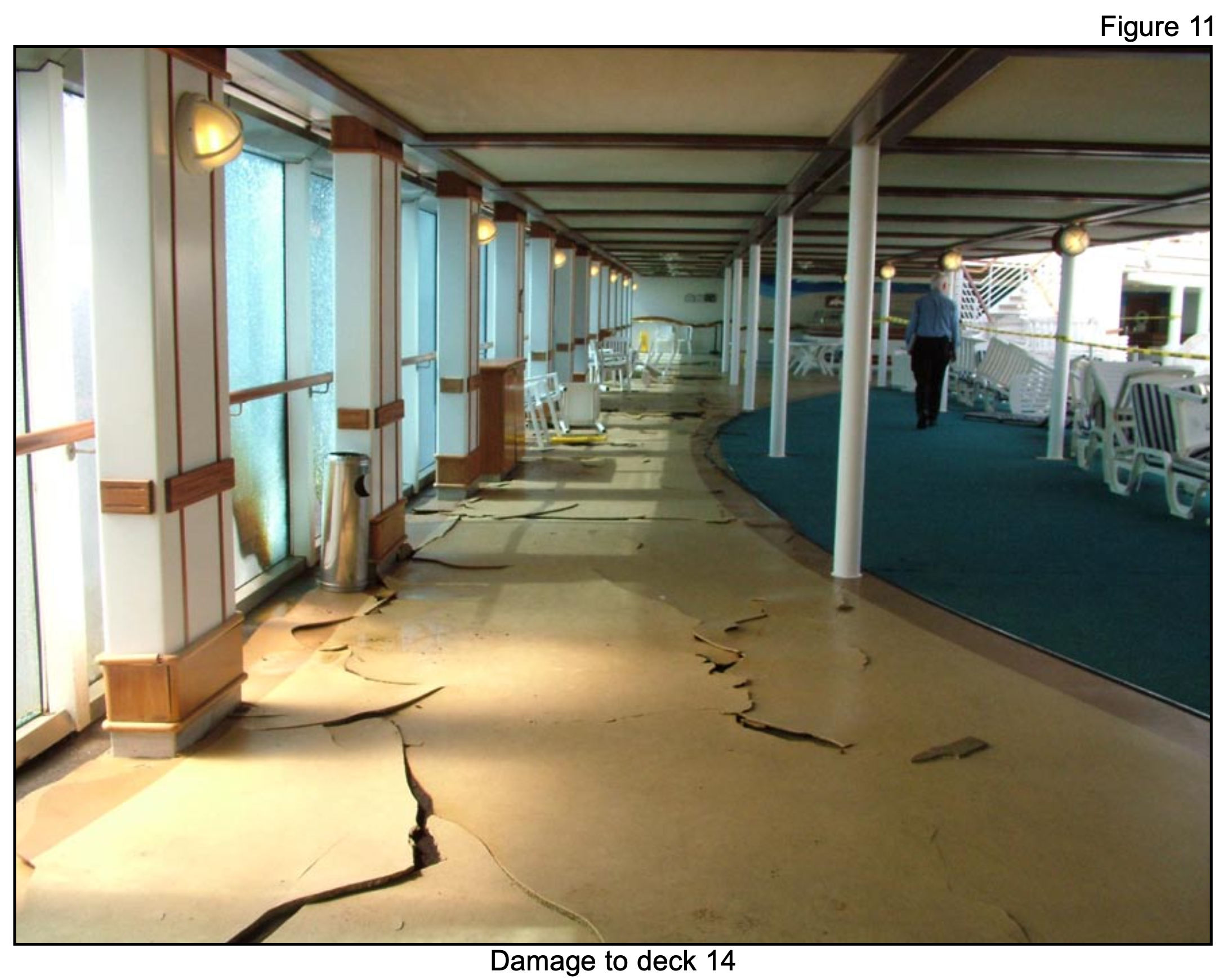
The Star Princess sustained major damage requiring extensive repairs. Seventy-nine staterooms were deemed a total loss following the fire, with an additional 218 suffering damage from fire, smoke, or water. The damaged area covered three vertical fire zones across five decks.
The ship received temporary repairs in the Bahamas, then sailed to Bremerhaven, Germany, for permanent repairs. When Star Princess finally returned to service on May 15, 2006 – less than two months after the incident.
The regulatory amendments and industry-wide safety improvements that resulted from this incident would influence ship design and safety protocols for years to come. For 14 years, the Star Princess continued operating for Princess Cruises and in 2020, she was transferred to P&O Cruises Australia.
When Carnival Corporation discontinued P&O Cruises Australia in 2024, the ship was rebranded once again as the Carnival Adventure.
For most passengers boarding the Carnival Adventure, the ship will simply be another cruise vessel. Few will know anything about the 2006 fire or it’s role in changing the rules regarding cruise ship safety. Even fewer will realize that the safer balcony designs, fire detection and suppression systems throughout the ship, and the stricter material standards for their staterooms all exist partly because of what happened on this vessel two decades ago.
For those who would like to learn more about the Star Princess fire investigation, I’ve included a copy of the MAIB Investigative Report which can be downloaded as a PDF by clicking here.